
Polynesia
A vast Pacific subregion of shared culture and volcanic islands.

ReneeWrites · CC BY 4.0
The indigenous inhabitants, called Polynesians, share linguistic relations, cultural practices, and traditional beliefs. Geographically, the region is often defined by the Polynesian Triangle, connecting Hawaii, New Zealand, and Easter Island.
- Key geological feature
- Zealandia, a largely sunken continent
Lore & Background
Polynesia is characterized by a small amount of land spread over a large portion of the mid- and southern Pacific Ocean. Most Polynesian islands, including the Hawaiian Islands and Samoa, are volcanic islands built by hotspots. Other land masses, such as New Zealand, Norfolk Island, and Ouvéa, are unsubmerged portions of the largely sunken continent of Zealandia, which began sinking after breaking away from Gondwana around 85 million years ago. Subsidence continued well into the Cenozoic, with much of Zealandia becoming submerged during the Oligocene. The current land above sea level is due to tectonic uplift from the Pacific-Australian plate boundary. The convergent plate boundary north of New Zealand's North Island is the Kermadec-Tonga subduction zone, associated with volcanism that formed the Kermadec and Tongan islands.
Reader's Guide
Polynesia holds significance as a cultural term referring to one of the three parts of Oceania, alongside Melanesia and Micronesia. The Polynesian people are considered a subset of the Austronesian people, with linguistic, archaeological, and genetic evidence tracing their origins to Taiwan via Maritime Southeast Asia and Island Melanesia. Three theories explain their spread: the Express Train model (rapid expansion from Taiwan), the Entangled Bank model (long interaction with indigenous populations), and the Slow Boat model (longer hiatus in Melanesia with admixture). Archaeological evidence from Lapita sites supports the Express Train model, suggesting initial populations came directly from Taiwan or the northern Philippines without mixing with Australo-Papuans. The region's legacy includes widespread cultural traits across the Polynesian Triangle and beyond, with outliers in Micronesia, Melanesia, and sub-Antarctic islands.
Did You Know?
- The Polynesian Triangle connects Hawaii, New Zealand, and Easter Island.
- Zealandia, a largely sunken continent, underlies New Zealand and other land masses.
- The oldest rocks in the Hawaiian Islands themselves are only about 5–6 million years old, as the Emperor Seamounts north of Hawaii are not part of Polynesia.
Naming and the Polynesian Triangle
The name Polynesia carries a layered history reflecting centuries of European attempts to organize the vast Pacific. French writer Charles de Brosses first introduced the term Polynésie in 1756, originally applying it to every island in the Pacific Ocean. It was not until 1831 that Jules Dumont d'Urville, in a lecture at the Société de Géographie in Paris, proposed a considerably narrower definition that brought the concept closer to its modern meaning. For much of the colonial era, the southern Pacific islands were simply known as the South Sea Islands, and their inhabitants as South Sea Islanders. The Hawaiian Islands were frequently included in this grouping on account of their relative proximity to southern Pacific islands, even though they actually lie in the North Pacific. To resolve this geographic inconsistency, the term the Polynesian Triangle came into use. By connecting Hawaii at the northern vertex with New Zealand and Easter Island, this geometric framing made explicit that the grouping truly encompasses the Hawaiian archipelago while respecting the actual spatial arrangement of islands scattered across the central and southern Pacific.
Geology and the Zealandia Connection
Polynesia's geology is a story of fire, submergence, and resurrection. Most of the islands and archipelagos in the region, including the Hawaiian Islands and Samoa, are volcanic in origin, built up by hotspot volcanoes over millennia. Yet a significant portion of Polynesian landmass tells a very different story. New Zealand, Norfolk Island, and Ouvéa near New Caledonia are the unsubmerged remnants of Zealandia, a largely sunken continent. Zealandia is believed to have dropped below sea level roughly 23 million years ago. A subsequent shift in the movement of the Pacific Plate relative to the Indo-Australian Plate partially resurfaced the portion that is now New Zealand. The Kermadec-Tonga subduction zone, running northward from New Zealand's North Island, is responsible for the volcanism that created the Kermadec and Tongan island chains, while the Alpine Fault, a transform fault traversing the South Island, marks another major tectonic boundary. The oldest rocks in all of Polynesia are found in New Zealand, dating to approximately 510 million years, while the oldest rocks outside Zealandia belong to the Hawaiian Emperor Seamount Chain at around 80 million years old.
Geographical Scope and Island Groups
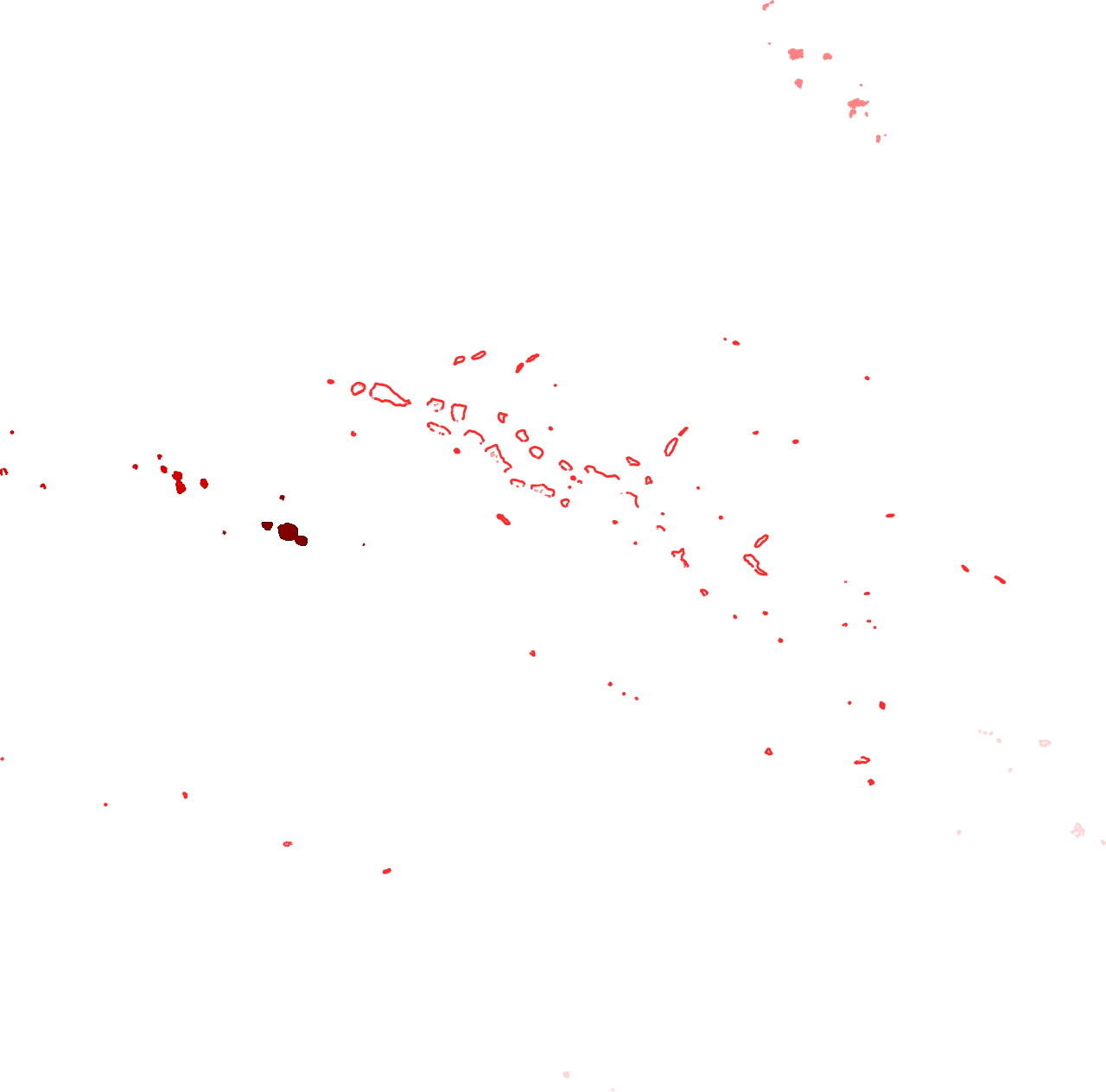
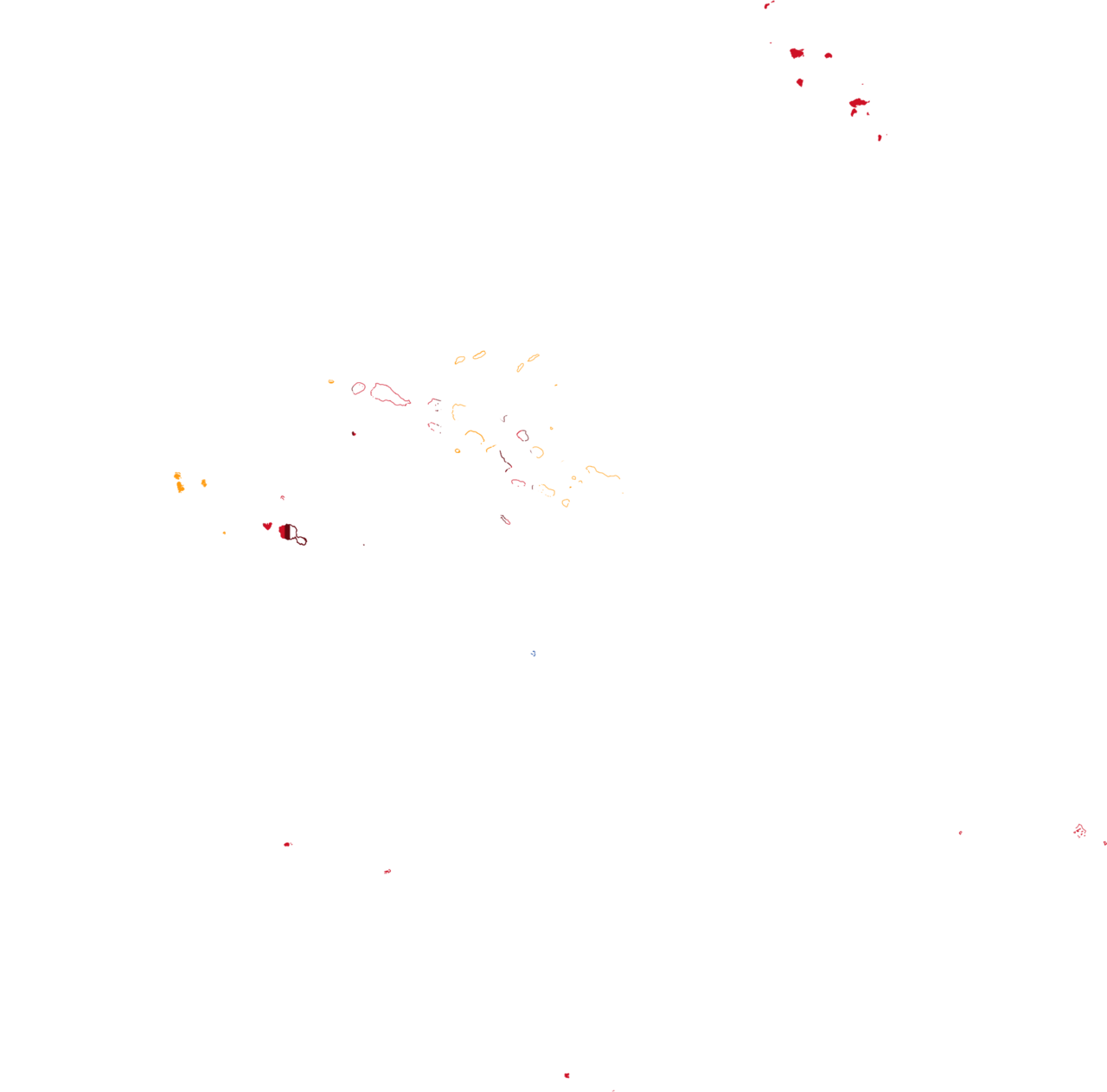
Despite its name suggesting a single unified landmass, Polynesia is defined by an extraordinary dispersal: more than 1,000 islands spread across the central and southern Pacific Ocean, yet covering only about 300,000 to 310,000 square kilometres of land. More than 270,000 of those square kilometres fall within New Zealand, while the Hawaiian archipelago accounts for roughly half of the remainder. The region is generally delineated by the Polynesian Triangle, with its vertices at Hawaii, New Zealand, and Easter Island. Within that vast triangular expanse lie Samoa, Tonga, the Cook Islands, Tuvalu, Tokelau, Niue, Wallis and Futuna, and French Polynesia. Yet Polynesian cultural presence extends well beyond these boundaries. Small Polynesian settlements exist in Papua New Guinea, the Solomon Islands, the Caroline Islands, and Vanuatu. Rotuma, north of Fiji, carries strong Polynesian cultural traits despite its inhabitants speaking a non-Polynesian language. The Line Islands and Phoenix Islands, mostly part of Kiribati, had no permanent settlements before European colonization but are often included in the triangle. In essence, Polynesia remains as much a cultural term as a geographic one, distinguishing it from Melanesia and Micronesia as one of Oceania's three major parts.
Origins and the Austronesian Migration
The story of how Polynesia was populated is one of the most remarkable human migrations in history. Linguistic, archaeological, and human genetic evidence all converge to identify the Polynesian people as a subset of the broader sea-migrating Austronesian group. Tracing the roots of Polynesian languages leads researchers back through Island Melanesia and Maritime Southeast Asia, ultimately to Taiwan as the prehistoric homeland. Between roughly 3000 and 1000 BC, speakers of Austronesian languages began spreading from Taiwan into Maritime Southeast Asia, setting in motion a chain of seafaring expansions that would eventually carry Polynesian ancestors across the Pacific. The indigenous people who inhabit the islands of Polynesia are called Polynesians, and despite the vast distances separating their home islands, they share deep linguistic relations, cultural practices, and traditional beliefs. This common heritage, forged over thousands of years of oceanic voyaging, binds together communities from the volcanic hotspots of the central Pacific to the continental remnants of the far south, creating a cultural region that defies simple geographic boundaries.
Gallery

Frequently Asked Questions
How is Polynesia's geography defined?
The region is most commonly outlined by the Polynesian Triangle, a three-point shape linking Hawaii, New Zealand, and Easter Island. New Zealand dominates the land area, while the remaining islands are mostly small volcanic or coral formations dotting the open ocean.
What is Zealandia and how does it relate to Polynesia?
Zealandia is a vast, mostly submerged continental plate that underlies much of the Polynesian region beneath the Pacific. It gives the area a unique geological foundation that is largely hidden below sea level.
Why is Polynesia culturally significant?
Polynesian peoples built one of history's most extraordinary seafaring traditions, settling islands across an immense ocean without modern technology. Their shared navigation knowledge, artistic traditions, and linguistic heritage make the region a foundational pillar of Pacific identity.
More in Countries And Regions 25-29
Elsewhere in the Countries And Regions universe
Spotted an error? Know more?
This is a living reference — every entry is fact-audited, and reader corrections feed straight into our audit queue. Suggest an edit · See this site's audit record