
Provence
A southeastern French region with Roman origins and lasting cultural identity.

Unknown author · Public domain
Provence is a geographical, cultural region and historical province of southeastern France, stretching from the left bank of the lower Rhône to the Italian border, bordered by the Mediterranean Sea to the south. It largely corresponds with the modern administrative region of Provence-Alpes-Côte d'Azur and includes the departments of Var, Bouches-du-Rhône, Alpes-de-Haute-Provence, and parts of Alpes-Maritimes and Vaucluse. The largest city and modern-day capital is Marseille. The region was the first Roman province beyond the Alps, called Provincia Romana, which evolved into the present name. It hosted the Avignon papacy in the Middle Ages, when the Pope and his Curia fled Rome. The region retains a distinct cultural and linguistic identity, particularly in the interior.
- field
- Geography, history, culture
- nationality
- French
- known_for
- First Roman province beyond the Alps; Avignon papacy; distinct cultural and linguistic identity
- largest_city
- Marseille
- historical_capital
- Aquae Sextiae (Aix-en-Provence)
Lore & Background
Provence has some of the earliest known sites of human habitation in Europe. Primitive stone tools dating back 1 to 1.05 million years BC were found in the Grotte du Vallonnet near Roquebrune-Cap-Martin. The Paleolithic period saw great climate changes, with sea levels varying dramatically. Between the 10th and 4th century BC, the Ligures inhabited Provence from Massilia to modern Liguria. They were of uncertain origin, possibly descendants of indigenous Neolithic peoples. Celts began moving into Provence between the 8th and 5th centuries BC, with iron weapons that allowed them to defeat local tribes. Celts and Ligurians eventually shared the territory, building hilltop forts called oppida.
Reader's Guide
Provence's significance lies in its role as a crossroads of prehistoric, Greek, Roman, and medieval civilizations. The region's name derives from the Roman Provincia Romana, reflecting its status as the first Roman province beyond the Alps. Its coast contains some of Europe's earliest human habitation sites, including the Cosquer Cave with Paleolithic art. The Greek settlement of Massalia became a major trading port, linking the Mediterranean with inland Gaul. The region later hosted the Avignon papacy in the Middle Ages. Its legacy includes the preservation of Ligurian place names, Celtic oppida, and Greek-founded cities that remain important today.
Did You Know?
- The region's name evolved from the Roman 'Provincia Romana' to 'Provincia' and then to 'Provence' as Latin became Provençal.
A Landscape of Extremes: From Alpine Peaks to the Mediterranean Shore
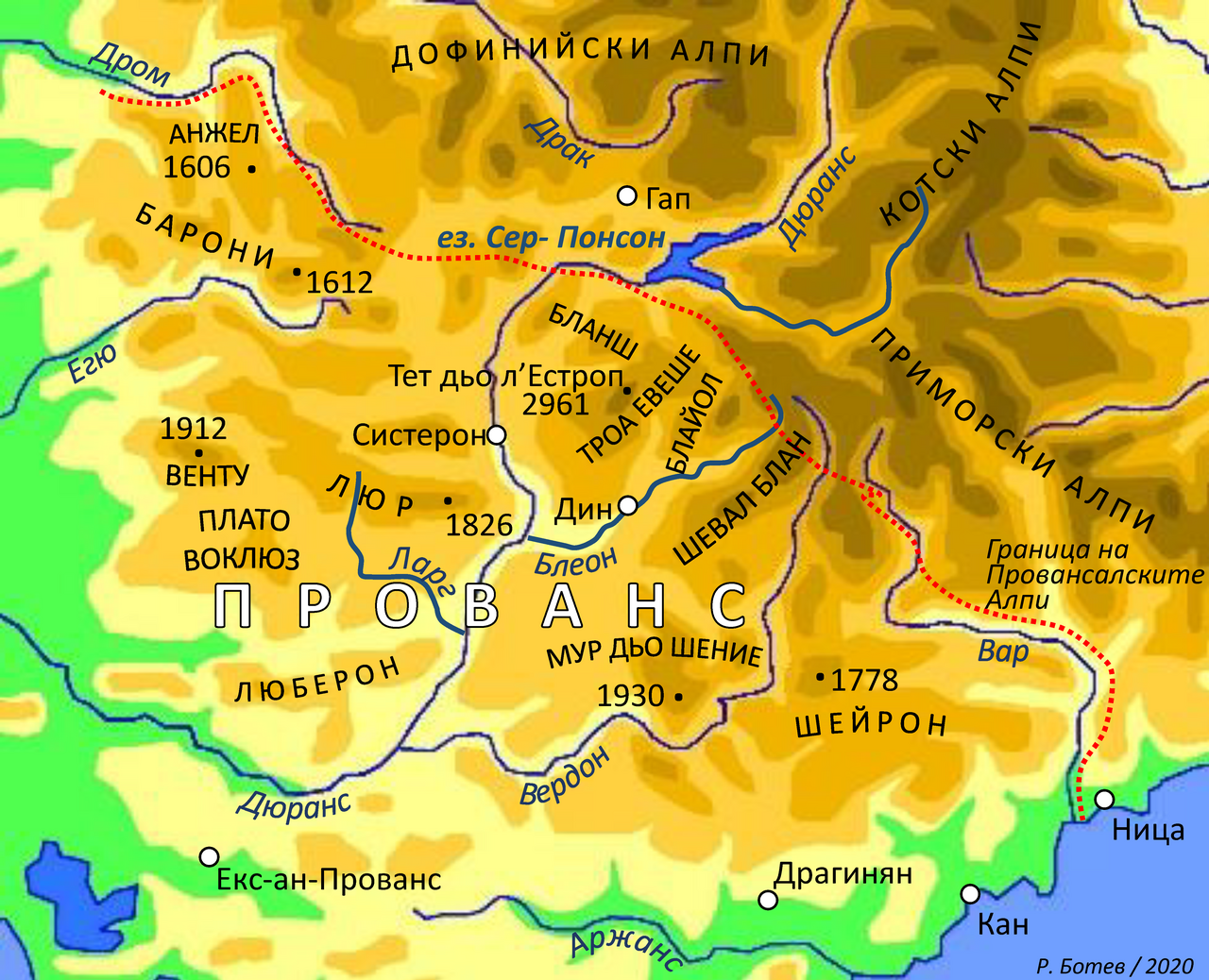
Stretching across 31,400 square kilometres in the far southeastern corner of the French mainland, this region presents one of the most dramatic geographic ranges in all of France. Its terrain sweeps from the high peaks of the Alps in the north, through rolling plains and alpine lakes such as Gignoux Lake, down to a sweeping Mediterranean coastline where the majority of residents make their homes. Four major rivers—the Rhône, Durance, Var, and Arc—thread through the landscape, with the Rhône forming the region's westernmost boundary alongside the border with Occitanie. To the east, the frontier runs along the Italian regions of Liguria and Piedmont, while the tiny Principality of Monaco tucks into the southeastern shore. The celebrated Côte d'Azur stretches along the southern coast, threading through a string of towns from Nice and Antibes through Cannes, Fréjus, and on to Saint-Tropez. Inland, the city of Avignon sits on the Rhône, encircled by its ancient medieval stone walls. The territory is administratively divided into six departments, and its borders remained unchanged even after the 2016 French regional reorganization.
A Constellation of Cities, Each with a Distinct Role
No single city dominates this region quite like Marseille, the regional prefecture and France's second-largest city proper with over 870,000 residents. Its metropolitan area, when combined with neighboring Aix-en-Provence, swells past 1.9 million people, making it the third-largest urban cluster in the country after Paris and Lyon. Further east along the coast, Nice commands the region's second-largest population concentration, with roughly 345,000 city residents and an urban footprint exceeding one million, ranking it fifth among French cities. Toulon, with its population of nearly 168,000, anchors the Var department and serves as a major Mediterranean military harbour housing a French naval base. Inland, Aix-en-Provence—home to about 143,000 people—has long been the region's premier university town and remains its most important educational centre. Two smaller cities punch far above their weight on the world stage: Cannes, a modest town of roughly 74,000, hosts the globally celebrated annual film festival that has put the region on the international map, while Arles, population around 53,000, is forever linked to Vincent van Gogh, who lived there and produced some 300 paintings during his stay.
A Living Mosaic of Languages and Migrations
French is the dominant tongue of the region, yet the linguistic landscape reveals a rich multilingual heritage. A 1999 census survey of mother tongues found that beyond French, Provençal was spoken by 5.2 percent of respondents, Italian by 4.4 percent, Arabic by 3.0 percent, Spanish by 2.8 percent, and Corsican by 1.1 percent. This diversity reflects decades of sustained immigration. Since the 1960s, the region has attracted waves of settlers from Portugal, Spain, Italy, Algeria, Tunisia, and Morocco, as well as internal migration from northern France. A 2009 study noted that nearly 40 percent of all newborns in 2007 had at least one parent of immigrant background—the second-highest rate in France after Greater Paris. These cultural crosscurrents extend into the arts and global identity: the Cannes Film Festival has made the region synonymous with cinematic glamour, while Arles carries the enduring legacy of van Gogh's prolific creative period. The region's economy, the third largest in France behind Île-de-France and Auvergne-Rhône-Alpes, is a product of this layered, cosmopolitan character.
A Patchwork of Provinces Forged into One Region
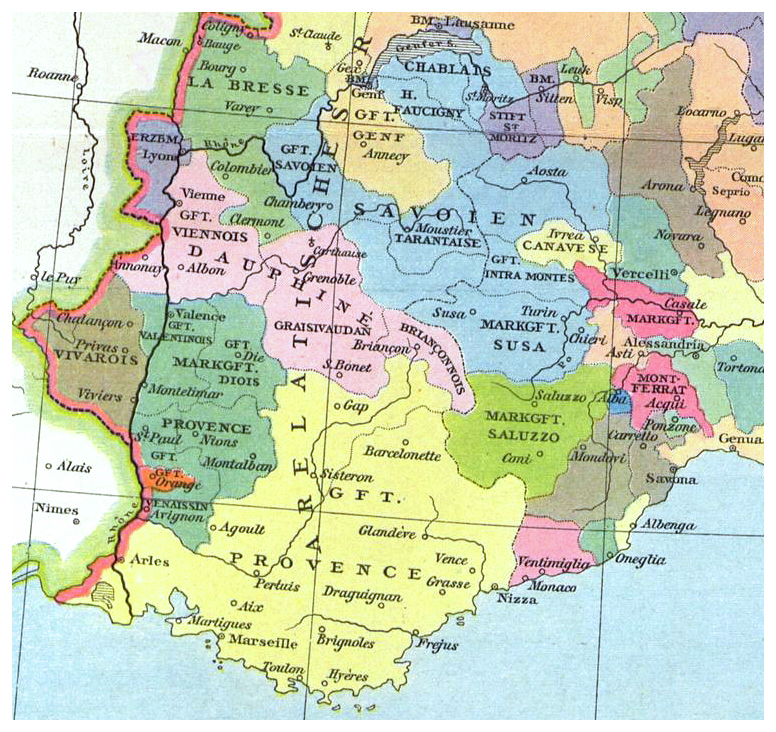
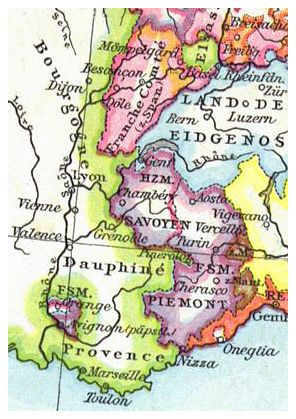
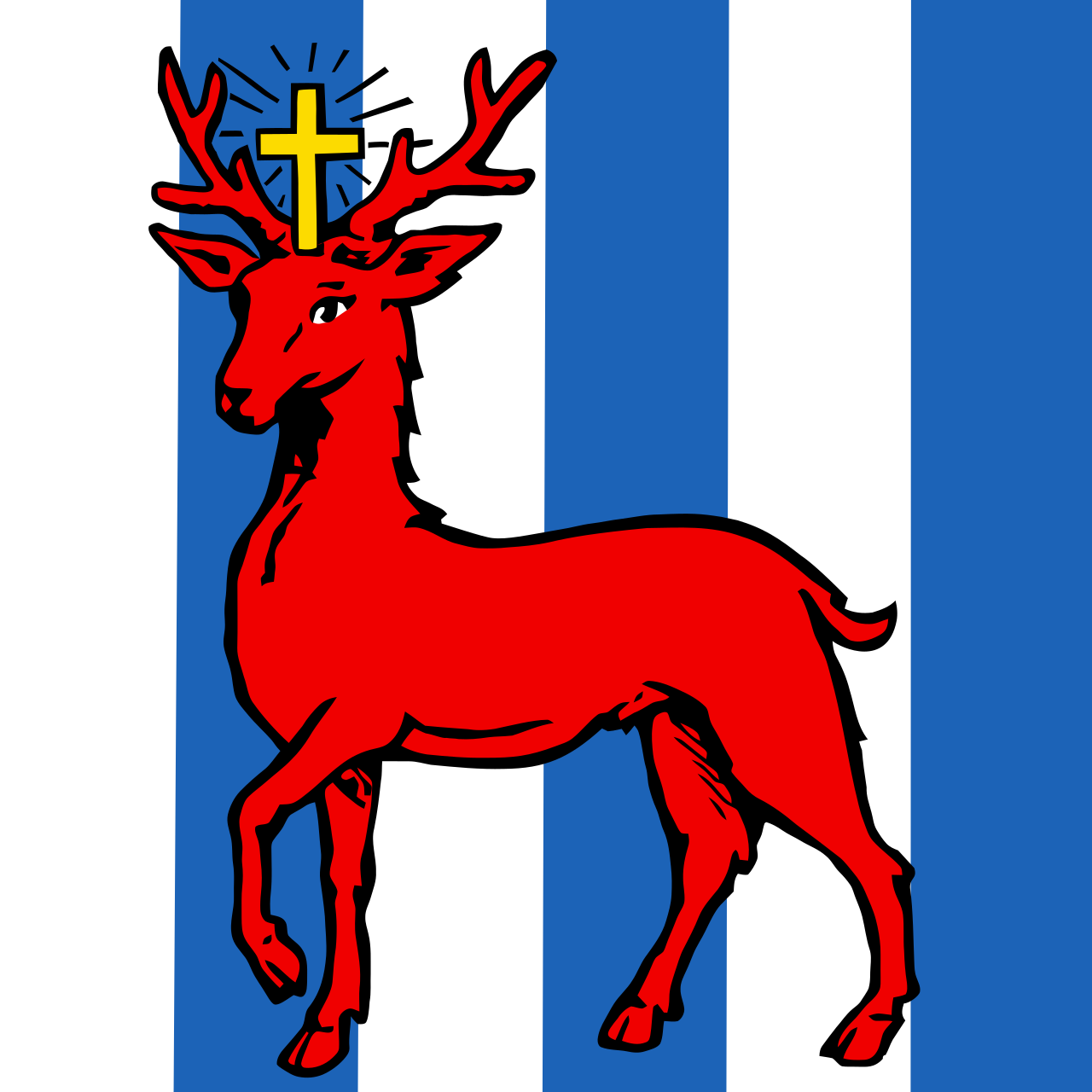
The modern administrative region is a patchwork assembled from several distinct historical territories. At its core lies the former French province of Provence, but the boundaries also absorb the old papal territory of Avignon, historically known as the Comtat Venaissin, which had been under papal rather than French crown control. The eastern coastal strip was once the Sardinian-Piedmontese County of Nice, only annexed to France in 1860; its shoreline is what the English-speaking world calls the French Riviera and what French speakers know as the Côte d'Azur. The northern reaches incorporate the southeastern portion of the ancient province of Dauphiné, reaching up into the French Alps. For decades the region was identified by the acronym PACA, but in December 2017 it formally adopted the commercial nickname Région Sud, a shorter and more marketable label. The region's coat of arms, designed in the 1990s, deliberately weaves together the heraldic symbols of all these constituent provinces into a single regional logotype, acknowledging the layered political history that produced today's unified territory.
Gallery
Frequently Asked Questions
What is Provence?
Provence is a historical and cultural region in southeastern France, stretching from the lower Rhône River to the Italian border with the Mediterranean Sea to the south. It holds the distinction of being the first Roman province established beyond the Alps.
Why is it called Provence?
The name traces back to the Latin term 'Provincia Romana,' the designation Rome gave to this territory as its first province outside Italy. That administrative label gradually softened over the centuries into the modern name still in use today.
What are Provence's major cities and capitals?
Marseille is the region's largest city and serves as its modern-day capital. The historical seat of governance was Aquae Sextiae, the Roman settlement that is now known as Aix-en-Provence.
What is Provence most known for culturally?
The region is celebrated for its distinct linguistic and cultural identity, its role as the seat of the Avignon papacy in the fourteenth century, and its enduring traditions in art, literature, and cuisine. This layered heritage gives Provence a strong sense of regional pride that sets it apart from other parts of France.
How does Provence map onto modern French administration?
Most of the historical province falls within the present-day administrative region of Provence-Alpes-Côte d'Azur. It covers the departments of Var, Bouches-du-Rhône, and Alpes-de-Haute-Provence, along with portions of Alpes-Maritimes and Vaucluse.
More in Countries And Regions 25-29
Elsewhere in the Countries And Regions universe
Spotted an error? Know more?
This is a living reference — every entry is fact-audited, and reader corrections feed straight into our audit queue. Suggest an edit · See this site's audit record