
Latin America
Cultural region of the Americas where Romance languages dominate.

Henrykez · CC BY-SA 4.0
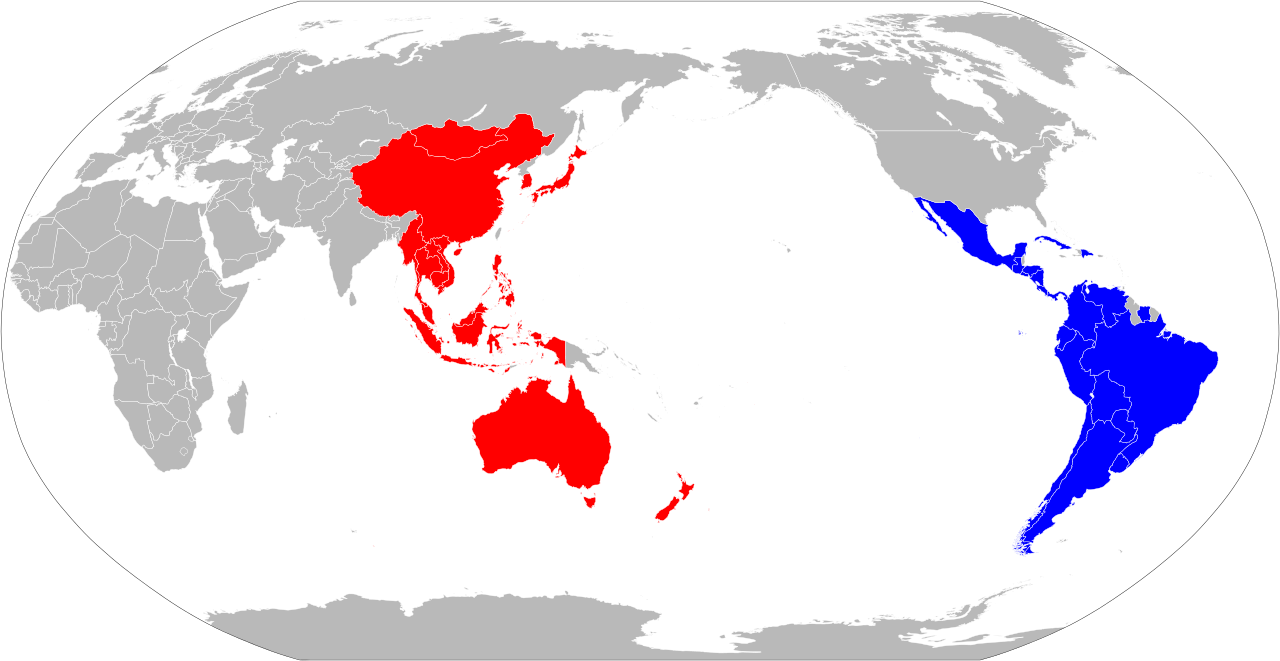
Latin America is a cultural region of the Americas where Romance languages, primarily Spanish and Portuguese, are predominantly spoken. The source lists regions commonly used in Latin America, including geopolitical regions like Central America, the Caribbean, and the Southern Cone; geographic regions such as Mexico, the Amazon basin, and Patagonia; historical regions like Mesoamerica and Araucanía; and cultural regions divided into Iberoamerica (Hispanoamerica and Lusoamerica) and Francophone America. The term "Latin America" itself is not defined in the source, but the source provides a comprehensive list of regions that are commonly used within the concept.
- First introduced
- 1856
- Coined by
- Francisco Bilbao
- Language basis
- Romance languages (Spanish, Portuguese)
- Related terms
- Hispanic America, Ibero-America
- Excluded regions
- English- and Dutch-speaking areas (e.g., Belize, Guyana, Jamaica, Suriname)
- Modern definition includes
- Countries where Spanish or Portuguese is spoken and Roman Catholicism is dominant
Lore & Background
The source provides a detailed list of regions commonly used in Latin America, organized into geopolitical, geographic, historical, cultural, and ecological categories. Geopolitical regions include Central America, the Caribbean (partially), and the Southern Cone. Geographic regions span Mexico (Bajio, Huasteca, Totonacapan, etc.), the Caribbean (Antilles, Greater Antilles, Lesser Antilles, Grenadines, Lucayan archipelago), Central America (Isthmus of Panama, Mosquito Coast, Soconusco), and South America (Amazon basin, Andes, Altiplano, Patagonia, etc.). Historical regions include Aridoamerica, Oasisamerica, Mesoamerica, Las Californias, and the Suyus of the Inca Empire (Chinchay Suyu, Antisuyu, Qullasuyu, Kuntisuyu). Cultural regions are divided into Iberoamerica (Hispanoamerica and Lusoamerica) and Francophone America. Hispanoamerica includes North America (Aridoamerica, Aztlan, Comancheria, Apacheria, Oasisamerica, Mesoamerica, Central America), the Spanish Caribbean (Las Antillas Occidentales, Lesser Antilles, West Indies Federation, Caribbean Mainland, Florida), and South America (Gran Colombia, Peru-Bolivian Confederation, Andean regions, Gaucho regions, Rioplatense region, Mapuche world). Lusoamerica covers Brazil's regions: South, Central-West, Northeast, North, and Southeast. Francophone America includes North America (Louisiana, Quebec, Saint Pierre and Miquelon) and the Caribbean (Guadeloupe, Haiti, Martinique, Saint Barthelemy, French Guiana, Inini, Saint-Martin). Ecological regions include Galápagos, Interandean Valles, Mesoamerican Biological Corridor, Caatinga, and country-specific lists.
Reader's Guide
When exploring Latin America through the source's lens, start with geopolitical regions: Central America, the Caribbean (partially), and the Southern Cone. For geographic regions, note Mexico's subregions like Bajio, Huasteca, and Totonacapan; the Caribbean's Antilles, Greater Antilles, Lesser Antilles, Grenadines, and Lucayan archipelago; Central America's Isthmus of Panama, Mosquito Coast, and Soconusco; and South America's Amazon basin, Andes, Altiplano, Patagonia, and more. Historical regions offer depth: Aridoamerica, Oasisamerica, and Mesoamerica in the north; Las Californias, Misiones Orientales, and Guayrá in the south; and the Suyus of the Inca Empire (Chinchay Suyu, Antisuyu, Qullasuyu, Kuntisuyu). Cultural regions are key: Hispanoamerica includes North America (Aridoamerica, Aztlan, Comancheria, Apacheria, Oasisamerica, Mesoamerica, Central America), the Spanish Caribbean (Las Antillas Occidentales—Cuba, Puerto Rico, Spanish Virgin Islands, Dominican Republic—Lesser Antilles, West Indies Federation, Caribbean Mainland, Florida), and South America (Gran Colombia, Peru-Bolivian Confederation, Andean regions, Gaucho regions, Rioplatense region, Mapuche world). Lusoamerica covers Brazil's South (Paraná, Rio Grande do Sul, Santa Catarina), Central-West (Goiás, Mato Grosso, Mato Grosso do Sul), Northeast (Maranhão, Piauí, Ceará, Rio Grande do Norte, Paraíba, Pernambuco, Alagoas, Sergipe, Bahia, Fernando de Noronha), North (Acre, Amapá, Amazonas, Pará, Rondônia, Roraima), and Southeast (Espírito Santo, Minas Gerais, Rio de Janeiro, São Paulo). Francophone America includes North America (Louisiana, Quebec, Saint Pierre and Miquelon) and the Caribbean (Guadeloupe, Haiti, Martinique, Saint Barthelemy, French Guiana, Inini, Saint-Martin). Ecological regions like Galápagos, Interandean Valles, Mesoamerican Biological Corridor, and Caatinga round out the list.
Did You Know?
- The source lists the Republic of the Rio Grande and the Republic of Yucatán as geographic regions of Mexico.
- The Suyus of the Inca Empire are listed as historical regions: Chinchay Suyu, Antisuyu, Qullasuyu, and Kuntisuyu.
- The source includes Florida as part of the Spanish Caribbean, noting it is historically and culturally tied to the region since Spanish settlement in the age of the Spanish Empire.
- The Guianas are listed as a cultural region, including Portuguese Guiana (now Amapa), Dutch Guiana (now Suriname), British Guiana (now Guyana), Spanish Guiana, and French Guiana.
- The source lists the Galápagos as an ecological region.
A Continent Shaped by Geography
The physical landscape of Latin America is extraordinarily varied, spanning from the high peaks of the Andes to the vast Amazon basin, from the arid expanse of the Atacama Desert to the lush Atlantic Rainforest. The continent's geographic regions include the Altiplano and Puna de Atacama in the highlands, the Brazilian Highlands and Cerrado in the interior, and the Pampas and Patagonia stretching to the southern tip at Tierra del Fuego. The Caribbean archipelagos—divided into Greater Antilles, Lesser Antilles, the Grenadines, and the Lucayan archipelago—form a distinct island geography. Central America is defined by narrow isthmuses: the Isthmus of Panama, the Isthmus of Tehuantepec, and the Isthmus of Rivas, each serving as critical land bridges connecting two great landmasses. In South America, the Gran Chaco, the Llanos, the Pantanal, and the Guianas represent vast lowland ecosystems, while the Chilean Central Valley and the Fjord of the Mountains illustrate the dramatic coastal topography of the Pacific rim. Even the Darién Gap, a dense jungle corridor between Panama and Colombia, remains a natural barrier that has shaped migration and trade for centuries.
Language as a Cultural Map
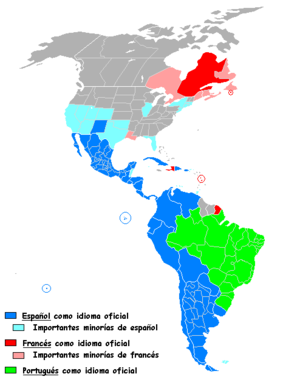
Latin America's cultural geography is deeply organized around the languages its peoples speak. The broad category of Iberoamerica encompasses all regions where an Iberian tongue is spoken, but within it three major linguistic zones emerge. Hispanoamerica covers the vast majority of the continent, from Aridoamerica in northern Mexico through Mesoamerica—where Aztec and Maya heritage still echoes in central and southern Mexico, Belize, Guatemala, Honduras, El Salvador, Nicaragua, and Costa Rica—down to the Andean regions where Quechua persists as a second language. The Rioplatense region, spanning Argentina, Uruguay, parts of Paraguay, and Brazil, carries a distinctly European imprint from waves of Italian, Spanish, and Portuguese immigration, with Italian loanwords woven into its Spanish dialect. Lusoamerica is represented by Brazil, whose internal cultural zones range from the syncretic Portuguese-African traditions of the Northeast to the cosmopolitan Southeast blending African, European, and indigenous influences. Meanwhile, Francophone territories—from Quebec and Louisiana in North America to Haiti, Guadeloupe, and Martinique in the Caribbean—preserve distinct French-language cultures shaped by African and European colonial histories.
Historical Layers Beneath the Modern Map
The political and cultural boundaries of Latin America are layered with centuries of historical formation. Mesoamerica, stretching from central and southern Mexico through Guatemala, Honduras, El Salvador, Nicaragua, Costa Rica, and Belize, carries the legacy of advanced ancient civilizations including the Aztec and Maya. In the Andes, the Inca Empire organized its territory into four administrative divisions—the Suyus of Chinchay Suyu, Antisuyu, Qullasuyu, and Kuntisuyu—whose geographic logic still resonates in modern national borders. Gran Colombia, uniting Colombia, Ecuador, Panama, Venezuela, and northern Peru, dissolved in 1831, yet its member nations continue to share food, music, language, and historical memory. Colonial experimentation left further traces: France Antarctique and Equinoctial France in South America, Dutch Brazil, and the various Guianas split among Portuguese, Dutch, British, Spanish, and French control. The Mosquito Coast, the Litoral Department that once gave Bolivia a seacoast, and the Republic of Sonora all remind us that the continent's borders are far from ancient or fixed.
Ecological Identity and Natural Regions
Beyond human-made borders, Latin America is defined by a remarkable array of ecological regions that give each area a distinct environmental character. The Galápagos Islands, the Mesoamerican Biological Corridor, and the Interandean Valles represent unique biodiversity zones. In Brazil, the Caatinga scrubland, the Cerrado savanna, the Pantanal wetlands, and the Atlantic Rainforest each support ecosystems found nowhere else on Earth. The Amazon basin anchors the continent's northern ecology, while the Atacama Desert in the south represents one of the driest places on the planet. The Puna de Atacama and the Altiplano Cundiboyacense illustrate how high-altitude environments create isolated ecological pockets. The Wet Andes, the Gran Chaco, and the Llanos of Venezuela and Colombia form vast transitional zones between the Andean highlands and the lowland tropics. Even the Fjord of the Mountains in southern Chile and the ecosystems of Tierra del Fuego mark the continent's dramatic southern edge. These natural regions—catalogued by country from Brazil to Peru to Cuba—form a living map that predates and transcends every political boundary.
Gallery
Frequently Asked Questions
What is Latin America?
Latin America is a cultural grouping in the Americas defined by the dominance of Romance languages—chiefly Spanish and Portuguese—rather than by strict borders. It spans parts of North America, Central America, South America, and the Caribbean, and is often associated with a shared Roman Catholic heritage.
Who invented the term 'Latin America' and when?
The phrase was first put forward in 1856 by Chilean politician Francisco Bilbao during a conference in Paris. It later became politically useful in the 1860s when Napoleon III of France used it to frame his intervention in Mexico.
Which countries count as Latin America?
The region typically includes Mexico, most of Central America (such as Guatemala and Honduras), the bulk of South America, and Spanish- or Portuguese-speaking Caribbean nations. English- and Dutch-speaking territories like Belize, Guyana, Jamaica, and Suriname are generally excluded.
Why is it called 'Latin' America?
The name refers to the fact that the region's dominant languages—Spanish and Portuguese—descend from Vulgar Latin, the everyday speech of the Roman Empire. This distinguishes it from English- or Dutch-speaking parts of the Western Hemisphere.
How does Latin America differ from 'Hispanic America' or 'Ibero-America'?
'Hispanic America' focuses specifically on Spanish-speaking countries, while 'Ibero-America' broadens the scope to include Portuguese-speaking nations like Brazil. 'Latin America' sits between the two, emphasizing the shared Romance-language and Catholic cultural roots rather than a single colonial power.
More in Countries And Regions 1-24
Related in Countries And Regions
Links follow this subject's own source article.
Elsewhere in the Countries And Regions universe
Spotted an error? Know more?
This is a living reference — every entry is fact-audited, and reader corrections feed straight into our audit queue. Suggest an edit · See this site's audit record